

Puzzles for 1–2-Year-Olds

Puzzles for children aged 1–2 start with large pieces, clear shapes and the joy of fitting things together. Find a simple puzzle for a 1- or 2-year-old among wooden puzzles, peg puzzles and small sets with just a few pieces. Always check the exact minimum age shown on the product.

Sort by
Filter and sort
Filter and sort

63 products

63 products

Puzzles for children aged 1–2 start with large pieces, clear shapes and the joy of fitting things together. Find a simple puzzle for a 1- or 2-year-old among wooden puzzles, peg puzzles and small sets with just a few pieces. Always check the exact minimum age shown on the product.

“I love those first puzzles, when a child picks up a piece, studies it and suddenly discovers where it belongs. That little smile when the shape fits is a lovely start to many cosy moments spent puzzling together.” – Anja Lytzen, owner of Lirum Larum Leg

Sebra Puslespil i træ – barn lægger dyrebrikker i puslespillet

Puzzles for 1–2-year-olds – their first little discoveries

A cow, a car or a colourful bird can be the start of a lovely time spent puzzling together. A puzzle for young children gives them something tangible to explore: they can pick up a piece, feel its shape and try to put it back. At first, the attempt itself is often just as exciting as the finished picture.

Here, we’ve gathered puzzles for 1–2-year-olds, with a variety of knobs, pictures and challenges. Some are suitable from 12 months, while others are intended for children aged 18 months or 2 years and up. The age range helps you browse the selection; the minimum age listed for each puzzle tells you whether it’s suitable for your child right now.

Moulin Roty Knoppuslespil m. 5 brikker, Jungledyr - Les Toupitis

Knob puzzles for little hands

A peg puzzle has a small knob on each piece, making them easier to lift. Your child can practise placing a single shape into an inset without having to complete a whole picture first. The distinct shapes give them something to look for as they work out which way to turn each piece.

A good puzzle for a one-year-old doesn’t need to have many pieces. Consider the knobs and the task, and choose a model recommended for your child’s age. In our selection of wooden puzzles you’ll find plenty of ways for little fingers to explore animals, vehicles and familiar everyday objects.

How many pieces are suitable for a 1- or 2-year-old?

For a child’s first puzzles, a few large pieces and a manageable challenge are a great place to start. A tray puzzle, where each shape has its own place, works differently from a jigsaw puzzle with pieces that fit together. The number of pieces alone therefore doesn’t tell you how difficult a puzzle is.

A puzzle for a 2-year-old can also consist of small pictures made up of two or just a few pieces. Start with one picture at a time, and set out more when your child is ready. Our collection of your child’s first puzzles offers more inspiration for an easy start, even when puzzles are still completely new.

  • Choose a puzzle with a minimum age recommendation that suits your child.
  • Compare the picture, piece size and number of pieces with your child’s experience.
  • Check the assembled dimensions, and leave room to experiment and take breaks.
Banana Panda Mit første puslespil med biler

Puzzles featuring animals, cars and little scenes

A familiar scene gives you plenty to talk about as you put the puzzle together. What sound does the animal make? Who’s driving the car, and what colour is the piece? You can point, put things into words and let your child show you how they like to explore the picture.

For a 2-year-old, an age-appropriate set with small pictures can make it fun to find pieces that go together. The activities vary from set to set. Banana Panda offers puzzles with familiar scenes for young children, among other things. Check the recommended age for the specific puzzle before choosing.

Puzzles for little ones, at your child’s own pace.
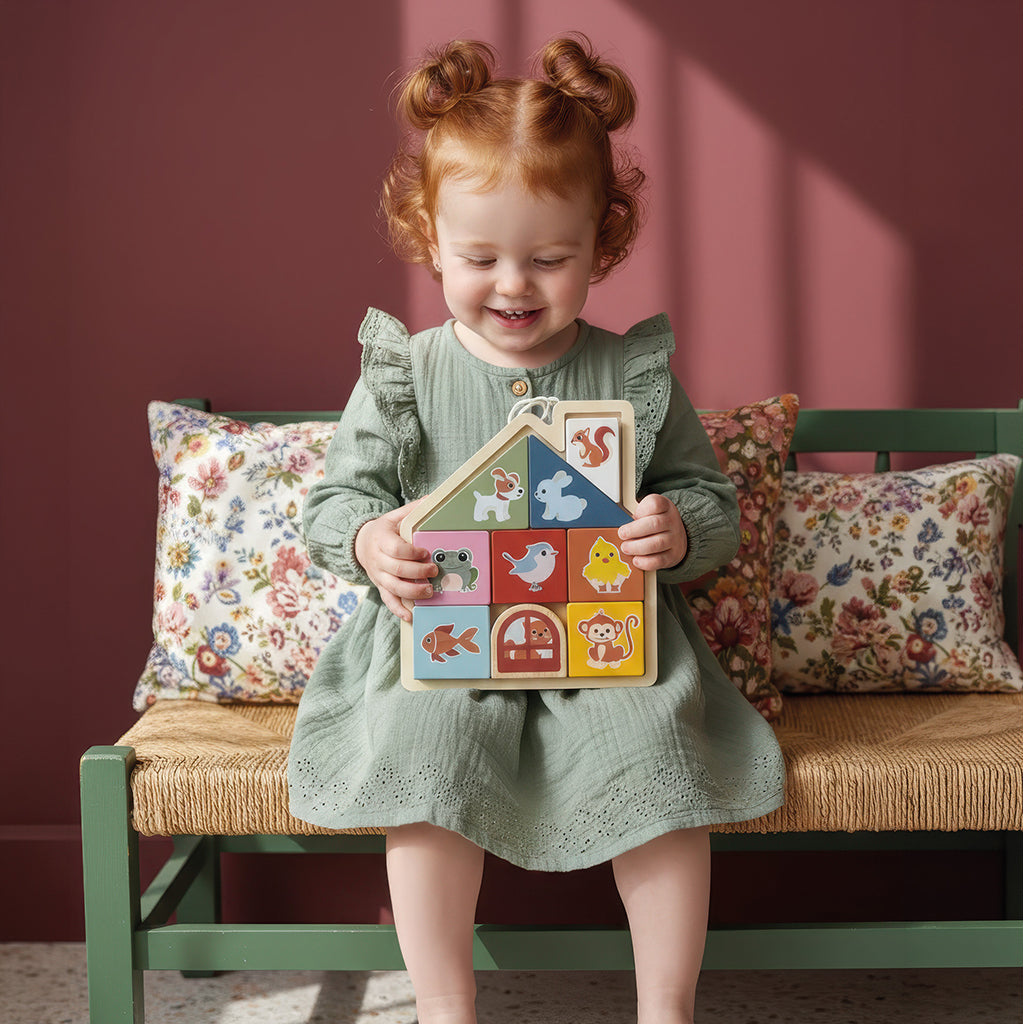
As your child turns and moves a puzzle piece, they get to coordinate their hands and eyes. You can offer support by putting out just a few pieces and waiting while your child tries. If you like, show them once how to turn a piece, then let them explore further.

A short puzzle session may be plenty for a young child. Put out fewer pieces if the task feels overwhelming, or take a break. Among our wooden puzzles, you’ll find simple shapes and different ways to grasp the pieces, so you can choose an activity that suits little hands and your child’s experience.

Speedy Monkey Magnetisk opdagelses puslespil

A puzzle for little ones that leaves them wanting more.

There’s a big difference between what captures the interest of a 1-year-old and a child who’s almost 3. Some children enjoy lifting the same pieces again and again, while others are fascinated by putting together a little picture. A good puzzle for a 2-year-old follows your child’s curiosity and doesn’t mean the next challenge always has to be bigger.

We have puzzles from brands including Sebra, Moulin Roty, Vilac and Djeco. Materials and features vary, so be sure to read the product details. When your child is ready for different challenges, you can move on to the next age group while still choosing based on the recommended minimum age and your child’s experience.

Give them their first puzzle—and time to play.

A puzzle for a first birthday or a gift for a 2-year-old can become an activity you return to together. Choose a picture your child recognises and a puzzle they can get started on. A beautiful box is lovely, but large, easy-to-handle pieces and the right age range matter more.

At Lirum Larum Leg, we love toys that invite little discoveries in everyday life. Find a calm spot, stay close to your child and let play continue for as long as it feels enjoyable. You can also explore our full range of puzzles to compare different types and find inspiration for later.

Questions about puzzles for 1–2-year-olds

Which puzzle is right for a 1-year-old?

Choose a puzzle recommended for children aged 12 months and up, with simple activities and pieces your child can grasp. Peg puzzles or inset puzzles can be a great place to start.

What is a good puzzle for a 2-year-old?

Look for an appropriate minimum age, large pieces and a familiar image. Some 2-year-olds enjoy inset puzzles, while others prefer small pictures with just a few pieces.

Are all the puzzles here suitable for children aged 1 and up?

No. The group also includes models for children aged 18 months and 2 years. Always follow the age recommendation for the specific product.

How many pieces should a child’s first jigsaw puzzle have?

Start with a few manageable pieces. The shape, grip and way of putting them together matter too; a particular number of pieces won’t automatically suit every child.

What is a knob puzzle?

This is a puzzle with knobs on the pieces that your child can use to lift them. Each shape is usually placed in a matching recess.

Can a puzzle be used from 18 months of age?

Yes, if the manufacturer recommends the model for children aged 18 months or younger. Check the specific product rather than relying solely on the age-group heading.

Should I help the child with the puzzle?

Join in and calmly show how to turn a piece. Then give your child time to try it themselves, and take a break if they lose interest.

Are wooden puzzles better than cardboard puzzles for young children?

It depends on the model. Wooden puzzles may have easy-to-grip pieces and recessed areas, while age-appropriate cardboard puzzles can offer simple assembly challenges. Follow the product instructions.

What can your child practise with puzzles?

Your child can explore shapes, turn over the pieces, and coordinate their hands and eyes. Talking about the pictures also creates opportunities for little conversations.

Is a puzzle a good first birthday gift?

A puzzle recommended for children aged 1 and up can make a lovely gift. Choose easy-to-handle pieces and an image your child will be curious to explore.

What should I do if the puzzle is too difficult?

Put out fewer pieces, try it together, or choose a simpler design. Your child doesn’t need to finish the task to enjoy playing.

Can younger children use their older siblings’ puzzles?

Only if the minimum age is appropriate. Puzzles with small pieces intended for older children should be kept separate from toys for younger children.