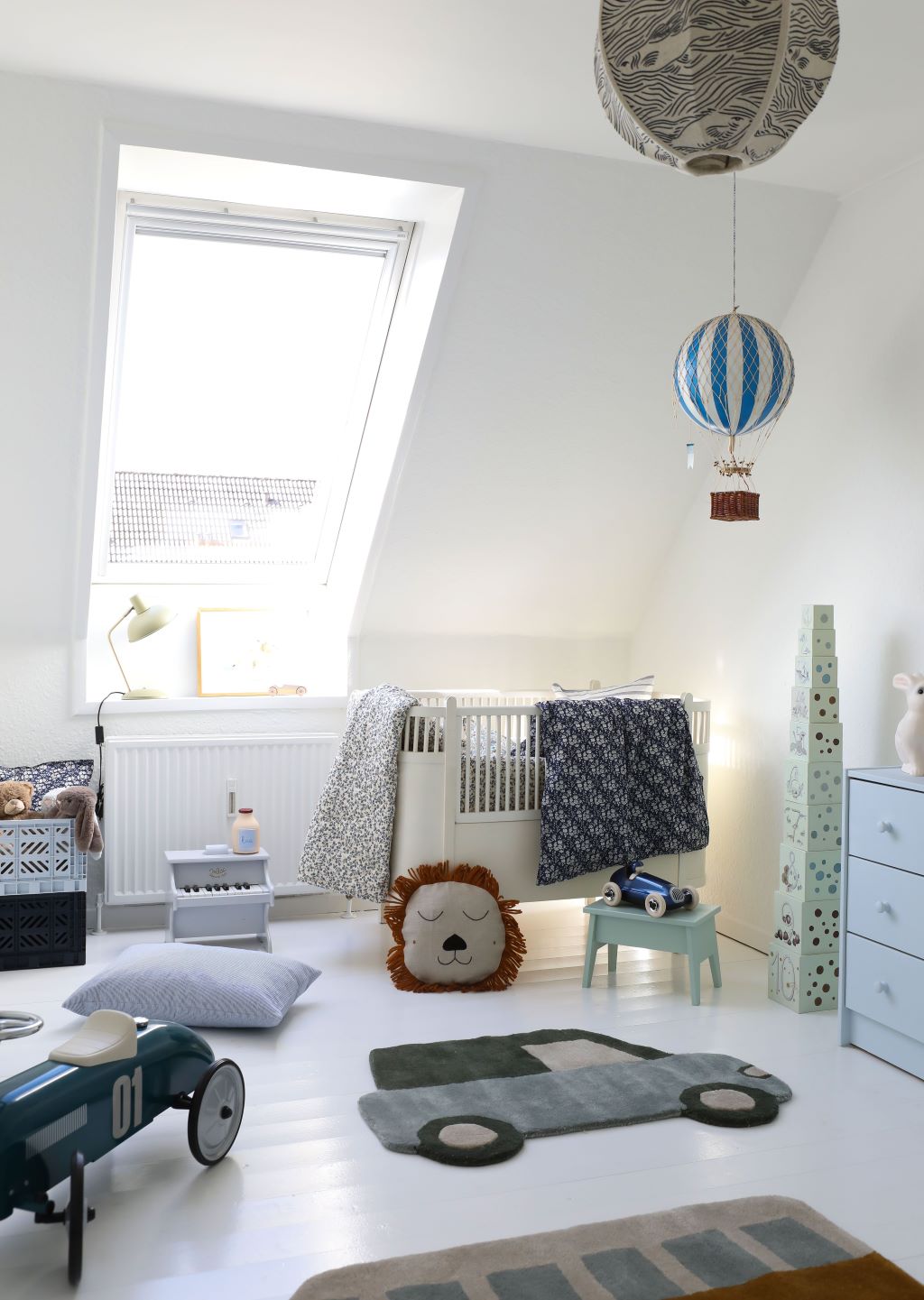
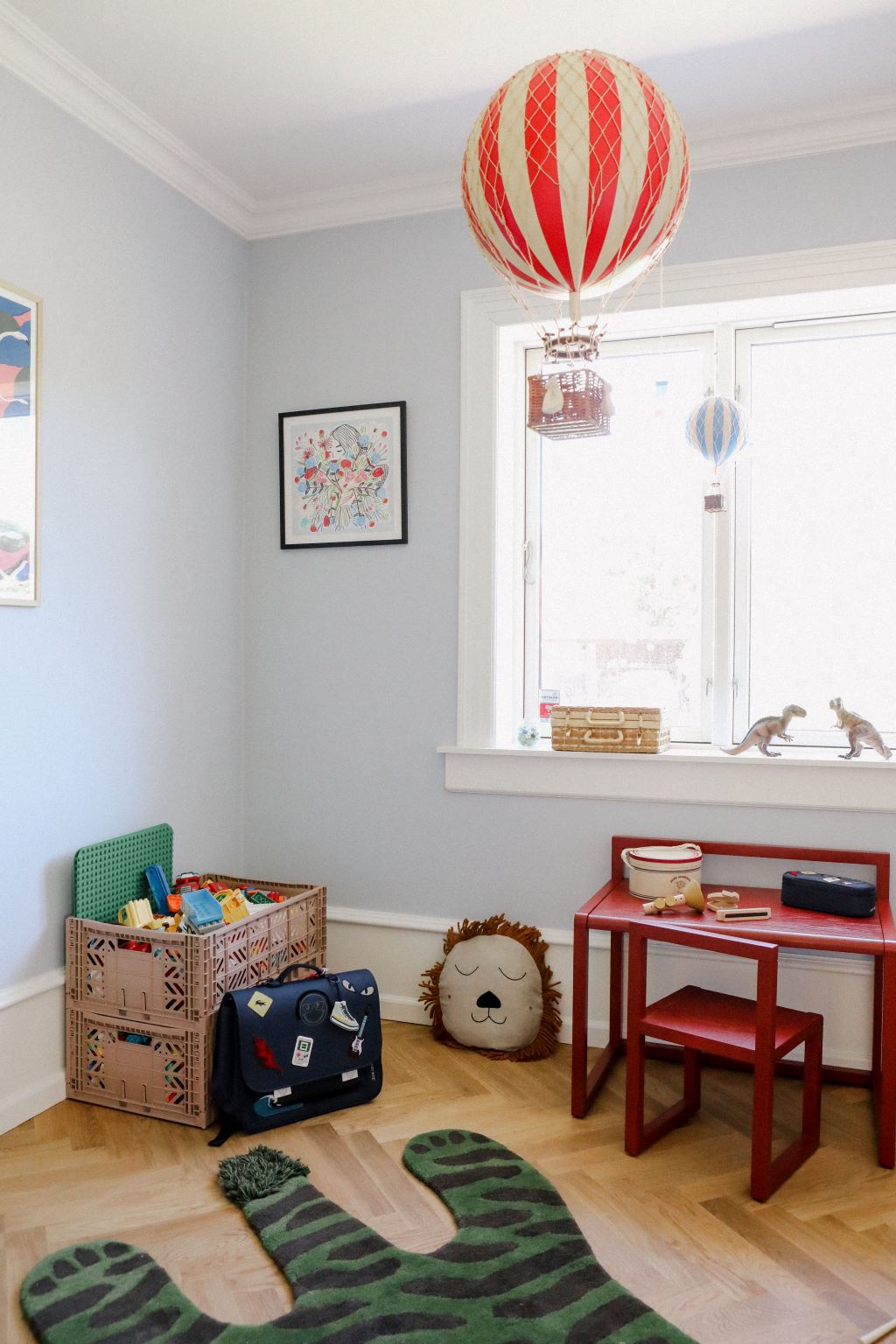
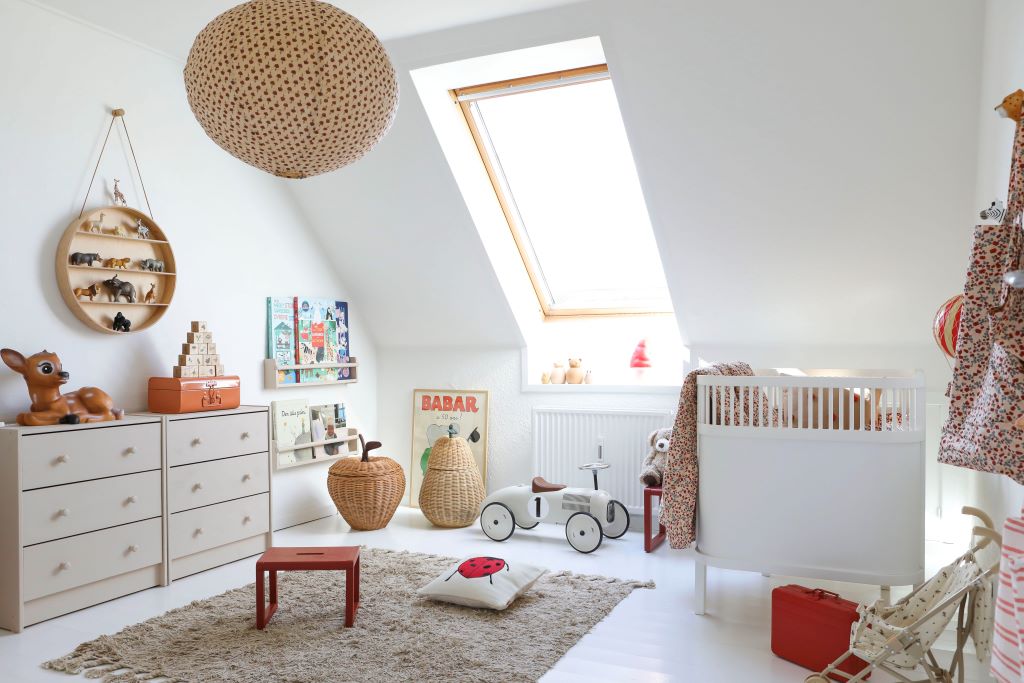
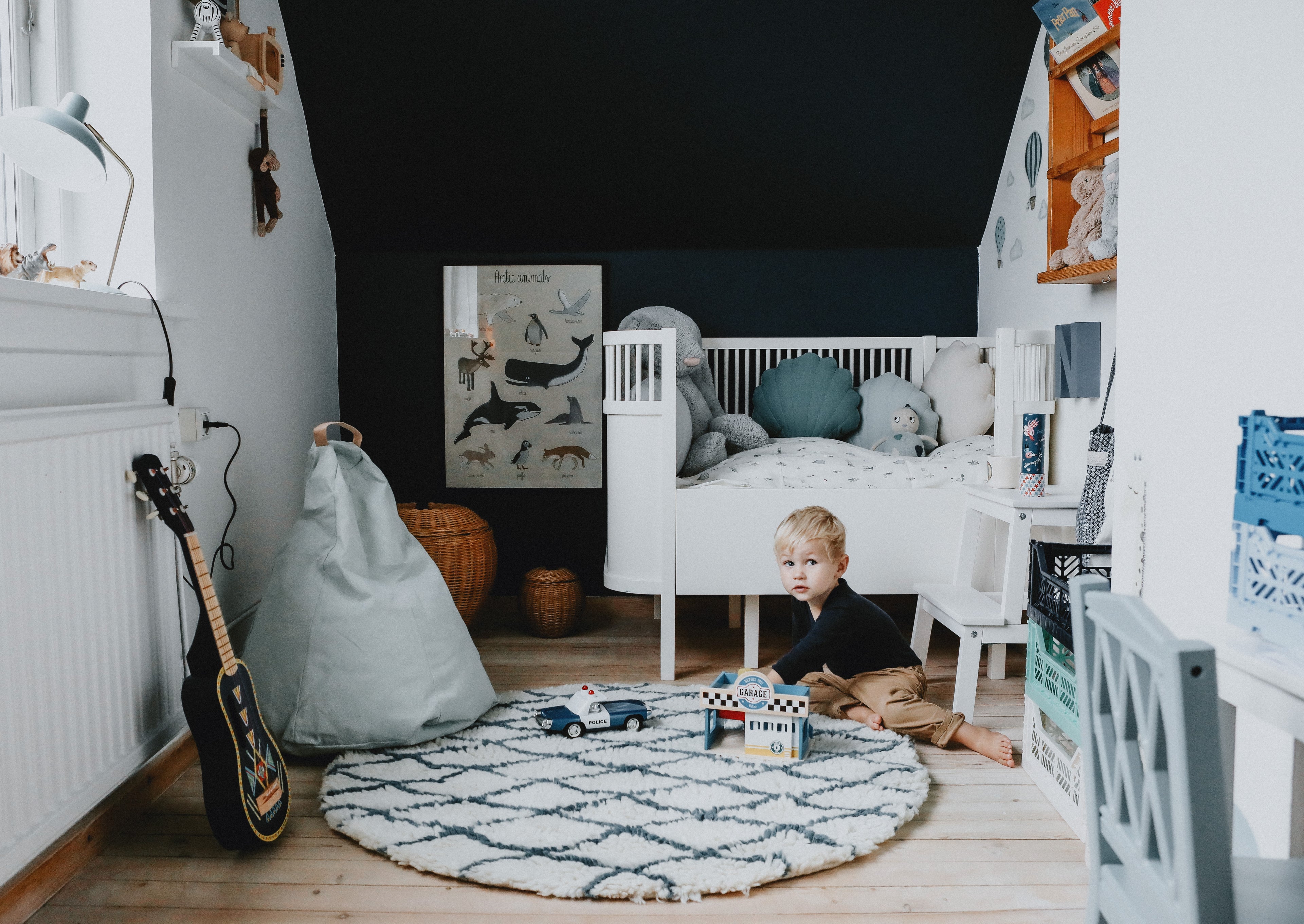
When designing a child's room based on age, it is essential to consider the child's needs, development, and play style. A well-designed children's room evolves with the child – in function, decor, and choice of toys.
0–2 years (baby room):
The focus here is on security, calm, and functionality. Furnish with a bed, changing area, and soft textiles such as blankets and a bed canopy. Add calming elements like a children's lamp with dimmed lighting and simple, sensory-stimulating toys such as fabric books, rattles, and activity gyms.
2–5 years (toddler and preschooler):
Play now takes center stage. Furnish with low children's furniture so your child can reach items independently, and create space for creative play. Use storage for toys like baskets and boxes to make tidying up easy. Incorporate toys as part of the decor – for example, pull-along toys, stacking toys, dollhouses, or play kitchens, which are both functional and decorative.
5+ years (older children):
Designing a child's room at this stage is about combining play, learning, and personality. Furnish with a desk, effective storage solutions, and zones for both study and play. Toys such as construction toys, games, and creative materials can remain part of the decor – ideally organized on shelves to visually enhance the room.
Regardless of age, flexible solutions like modular children's furniture, adjustable storage, and timeless interior design are advantageous. This makes it easy to continuously adapt the room and create a children's room that grows with your child.